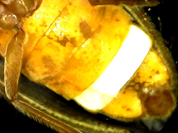

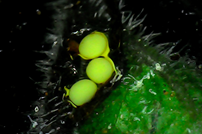
Firefly bioluminescence is one of the most remarkable natural phenomena observed in insects. Fireflies (family Lampyridae) are well-known for their ability to produce light through this highly efficient biochemical process. This light is generated in specialized organs located in the lower abdomen and is created through a reaction involving luciferin, luciferase, oxygen, ATP, and magnesium ions. When these components interact, firefly bioluminescence produces bright illumination with minimal heat, often referred to as “cold light” (Martin et al., 2019).
Understanding Firefly Bioluminescence
Firefly bioluminescence is a biological process where a living organism emits light through internal chemical reactions. This phenomenon is present across many species, from bacteria to deep-sea fish, fireflies, and even certain fungi. Historical texts from Dioscorides and Pliny the Elder reference glowing organisms and their supposed medicinal properties (Dybas, 2019).
How Firefly Light Is Produced
Fireflies create light through a reaction that occurs in specialized light-producing organs, located mainly in the lower abdomen. The enzyme luciferase catalyzes the oxidation of luciferin, which—combined with magnesium ions, oxygen, and ATP—creates a clean, efficient glow. Because the light is produced without significant heat, firefly bioluminescence is extremely energy-efficient.
Light Colors and Visual Effects in Firefly Bioluminescence
Firefly bioluminescence can appear yellow, green, or even pale red, with wavelengths between 510 and 670 nanometers. Certain species, such as the “blue ghost” fireflies, seem to emit a bluish-white glow from a distance. However, up close, their light appears green. This difference occurs due to the Purkinje effect, which alters human color perception under low-light conditions (Lewis & Cratsley, 2008).
Genetic Research Behind Bioluminescence
Modern studies have isolated luciferase genes and inserted them into other organisms for use in biotechnology, such as forensic science and medical testing. This works because the luciferase reaction detects ATP and magnesium ions—two essential components of cell metabolism.
Genome studies on species like Aquatica leii have revealed developmental genes tied to light organ formation. Two of these, Alabd-B and AlUnc-4, regulate the development and activation of bioluminescent organs (Frick & Roosen, 2008).
Evolutionary Development of Firefly Bioluminescence
In adult fireflies, bioluminescence plays a major role in mating displays. Although bioluminescence may have originally evolved in larvae as a warning to predators, it later became an essential tool for sexual communication. Evolutionary evidence shows the ability to produce light was gained, lost, and regained multiple times across firefly lineages.
Light-Based Courtship and Communication
Different firefly species communicate with distinct patterns such as rhythmic flashing, constant glowing, or a combination of light and pheromones. These species-specific signals help individuals recognize suitable mates and avoid interbreeding. Thus, firefly bioluminescence is essential for maintaining reproductive success and species boundaries (Branham & Wenzel, 2003).
Non-Bioluminescent Fireflies and Chemical Signaling
Not all fireflies rely on bioluminescence. Some species communicate primarily through pheromones.
Example: Phosphaenus hemipterus
This species has light organs but does not use them for mating. Instead, it communicates chemically through pheromones. Its large antennae and small eyes suggest a reduced dependence on visual cues. In this case, the light organs likely serve as defensive warnings against predators rather than as mating signals (De Coco & Matthysen, 2005).
REFERENCES
Branham, M.A. and Wenzel, J.W., 2003. The origin of photic behavior and the evolution of sexual communication in fireflies (Coleoptera: Lampyridae). Cladistics, 19(1), pp.1-22.
Day, J., 2009. Beetle bioluminescence: A genetic and enzymatic research review.
De Cock, R. and Matthysen, E., 2005. Sexual communication by pheromones in a firefly, Phosphaenus hemipterus (Coleoptera: Lampyridae). Animal behaviour, 70(4), pp.807-818.
Dybas CL. Bioluminescent, biofluorescent species light the way to new biomedical discoveries. Oceanography. 2019;32(4):8-9.
FRICK-RUPPERT, J.E. and ROSEN, J.J., 2008. Morphology and behavior of Phausis reticulata (blue ghost firefly). Journal of the North Carolina Academy of Science, pp.139-147.
Lewis, S.M. and Cratsley, C.K., 2008. Flash signal evolution, mate choice, and predation in fireflies. Annu. Rev. Entomol., 53(1), pp.293-321.
Martin, G.J., Stanger-Hall, K.F., Branham, M.A., Da Silveira, L.F., Lower, S.E., Hall, D.W., Li, X.Y., Lemmon, A.R., Moriarty Lemmon, E. and Bybee, S.M., 2019. Higher-level phylogeny and reclassification of Lampyridae (Coleoptera: Elateroidea). Insect Systematics and Diversity, 3(6), p.11.